
The Rituals of Readiness: Trust, Meaning, and Cultural Change in the Age of Intelligence
By FormWave Collective — Christa Bianchi, Derrick Cash, and Ray Palmer Foote
This article represents the shared thinking and lived experiences of FormWave Collective—a collaboration between professionals across branding, innovation, anthropology, and digital strategy—committed to surfacing signal, shaping what moves us, and reframing the future of work.
Summary:
AI readiness is not just technical—it is cultural. Rituals help teams build trust, connection, and shared meaning as AI enters work. By creating structured moments for acknowledgment, reflection, and reintegration, organizations synchronize human judgment with machine speed. The most prepared organizations aren’t the fastest—they’re the most rhythmic.
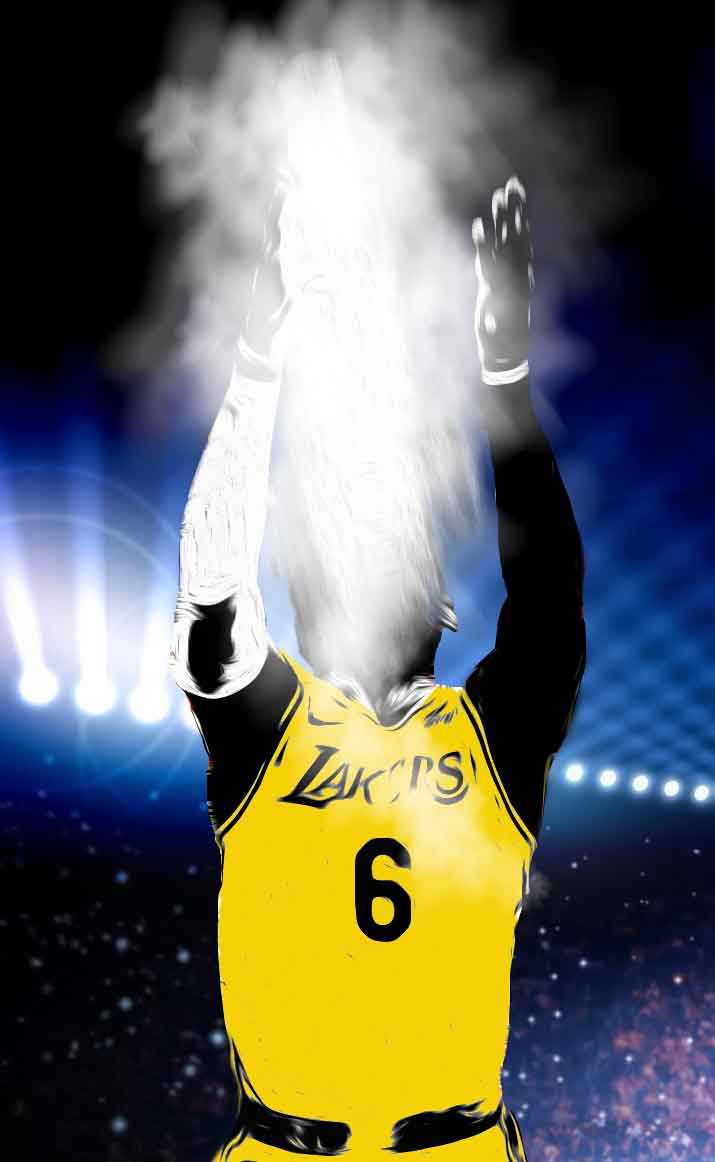
Why does Lebron James toss chalk at the beginning of a basketball game? Does it do anything other than improve his grip? Along with bringing the team and the fans together, and paying respect to his idol Michael Jordan, it’s a focus ritual. The iconic chalk toss has been captured thousands of times on camera, and is a window into how athletes and teams under pressure signal readiness.
In What Is AI Readiness, Really?, Derrick Cash defined readiness as the convergence of capability (data, systems, and governance) and alignment (culture, leadership, and ethics). This essay looks beneath those categories into the social and symbolic patterns that make alignment possible in the age of intelligence. While capability can be measured, alignment must be felt. That feeling of trust, participation, and belonging is not built through metrics but through rituals. Rituals are how humans metabolize change.
“Readiness is not just structural; it is ceremonial. It’s how organizations rehearse trust in the face of uncertainty.”
The Hidden Anthropology of Work
Modern workplaces already run on ritual, though they may not name it. The morning meeting, the project kickoff, the launch toast, hitting a bell after a sale, the postmortem. These are ritual forms that give shape to collective effort. As Erica Keswin writes in Rituals Roadmap, rituals in the workplace are not “nice-to-haves” but the invisible scaffolding that gives people meaning, connection, and consistency.
“Rituals anchor us when everything else feels in flux.” — Erica Keswin
Anthropologically, rituals act as a cultural operating system. They teach employees what is sacred, who holds authority, and what counts as success.
Research from journalist Katie Morrell, featured in Beautiful AI’s Work Beautiful podcast, extends this idea. Rituals, she found, are not abstract, they are embodied experiences that shape how people feel about work. Companies with shared rituals like onboarding traditions or milestone ceremonies, show higher cohesion, retention, and emotional investment.
Rituals synchronize bodies and beliefs in human ways. They transform a workflow into a community of meaning. And now, AI is rewriting that code.
When the Machine Enters the Ceremony
Every technological wave reshapes ritual. When industrial machinery entered factories, time clocks became sacred symbols. When email arrived, the inbox became an altar of labor. As AI enters knowledge work in the age of intelligence, organizations must ask again:
How do we make space for a non-human collaborator?
This is not a technical question, it’s an anthropological one. AI redefines:
- Authority rituals: Who decides what’s true when machines generate knowledge?
- Performance rituals: What does “good work” mean when AI co-authors it?
- Belonging rituals: How do we sustain human connection when automation may handle the connective tissue?
Ritual scientist Dr. Nick Hobson (University of Toronto) defines three conditions of a ritual:
- Scripted structure: a defined pattern.
- Irrationality: meaning that transcends logic.
- Symbolic significance: emotional resonance beyond the act itself.
Morrell adds two more: rituals must be physical and require collective buy-in.
These principles apply directly to technological integration including AI. A team that names its AI assistant, conducts regular “human review hours,” or holds “AI circle” discussions isn’t performing an empty ceremony, it’s rehearsing alignment between human and machine purpose.
Readiness, as Derrick outlined, requires alignment between technology and people. Rituals are how that alignment becomes lived experience.
The Rituals of Trust
In anthropology, rituals transform anxiety into trust. They don’t remove uncertainty, they make it meaningful.
Neuroscience explains why. Hobson’s studies show that ritual structure lowers amygdala activation, calming anxiety and increasing perceived control. Harvard’s Dr. Michael Norton found that participants who performed small rituals before stressful tasks, like impromptu karaoke, felt less anxious and performed better. Rituals literally reprogram the stress response.
In the AI era, organizations must design new Rituals of Trust:
- Transparency rituals: Regular “show-and-tell” sessions where teams demystify model behavior.
- Reflection rituals: Scheduled pauses to discuss what AI got right or wrong, restoring human judgment.
- Accountability rituals: Storytelling around missteps and learnings that reinforce shared ownership, not fear.
Without these, AI systems risk becoming what Bruno Latour called “black boxes of modernity”, objects we depend on but do not understand. With them, organizations convert AI from a source of opacity into a participant in the collective narrative of learning.
“Trust is not the absence of fear. It is the presence of ritual.”
Rhythm vs. Acceleration
One of AI’s deepest disruptions is temporal. Machines move instantly; humans trust slowly. Rituals help re-synchronize these tempos. Anthropologist Victor Turner described rituals as “liminal” (spaces between old and new). In the workplace, these liminal spaces include AI-off days, team debriefs, and human review windows.
These pauses are not inefficiencies, they are intervals of readiness where reflection and adaptation take root.
FWC’s [From Observability to Organizational Resilience] extends this point. It shows that dashboards capture technical health but not cultural rhythm. “Dashboards won’t save you. Culture will.”
Organizations most prepared for AI are not the fastest—they are the most rhythmic, balancing acceleration with reflection, automation with awareness.
Rituals: A Framework for AI Readiness
To embed this idea, Form Wave Collective proposes a Ritual Framework for Readiness, complementing the six dimensions of AI capability and alignment.
| Stage | Purpose | Example |
| Recognition Rituals | Acknowledge AI’s entry into the workflow—symbolically and socially. | Team-naming ceremonies for AI tools, shared onboarding statements. |
| Reflection Rituals | Reinforce meaning and ethical interpretation. | Monthly “AI Circle” discussions, value-alignment reviews. |
| Reintegration Rituals | Translate machine insights back into human context. | All-hands storytelling on how AI reshaped decisions or revealed blind spots. |
These layers make readiness sustainable:
- Leadership → modeled through ritualized openness.
- Culture → reinforced through connection rituals.
- Data → contextualized through interpretive rituals.
- Governance → embodied through accountability rituals.
Ritual, then, is not decoration, but the connective tissue of readiness.
Real-world examples echo this:
- Method’s “Rookie Cookies” ritual aligns new hires with team values through shared creation. A new hire chooses a cookie of their preference and makes about 50 of them. An email blast goes out, and every employee systemically visits the new hire and asks about their cookie. This initiates a connection between colleagues and reduces the anxiety of awkward introductions.
- In my experience touring with the band Sir Chloe, before every show the musical director would initiate a “pass the pulse” ritual. Members of the band formed a circle and held hands. The musical director initiated a “pulse” by squeezing another’s hand. The pulse was sent around the group until it began to take on a fast paced rhythm. It connected each band member physically and mentally, signaling a chain of trust and a reduction of anxiety of the collective.
Rituals: From Readiness to Resonance
The true goal of technological maturity is not efficiency, it is resonance: when human and machine intelligence harmonize in purpose, timing, and trust. Rituals make resonance repeatable and definable. They convert sporadic success into rhythm and belonging.
Without ritual, organizations adopt new technology the way average tourists adopt customs. Superficially, without understanding. With participation in ritual, they begin to live with technology as part of their individual and collective identity.
Morrell’s Work Beautiful conversation reminds us that the best rituals often begin in joy, spontaneity, shared jokes, communal meals, and gestures of care. These are not distractions; they are the emotional architecture of retention and trust.
As Form Wave Collective continues to map the human dimensions of readiness, anthropology provides the vocabulary for this next stage, where structure meets symbol, and data meets meaning.
Ritual as the Heartbeat of Readiness
Technology changes workflows. But the deeper transformation is cultural. The companies that thrive won’t just install new systems, they’ll rehearse new ways of being together. Readiness is a story of rituals. How we build trust, re-negotiate meaning, and keep the human circle intact, even as we widen it to include our machines.
When organizations ritualize reflection, belonging, and accountability, they do more than adapt, they give innovation rhythm, resonance, and soul.
“The organizations most prepared for AI are not the fastest—they are the most rhythmic.”
Citations:
- Cash, D., Bianchi, C., & Foote, R. P. (2025, September 8). “What Is AI Readiness, Really?” Form Wave Collective.
- Hobson, N. M., Bonk, D., & Inzlicht, M. (2017). “Rituals decrease the neural response to performance failure.” PeerJ Life & Environment, 5:e3363. https://doi.org/10.7717/peerj.3363
- Hobson, N. M., Schroeder, J., Risen, J. L., Xygalatas, D., & Inzlicht, M. (2017). “The Psychology of Rituals: An Integrative Review and Process-Based Framework.” Personality and Social Psychology Review, 21(3), 198-218. https://doi.org/10.1177/1088868317734944
- Tian, A. D., Schroeder, J., Häubl, G., & Risen, J. L., Michael I. Norton (2018). “Enacting Rituals to Improve Self-Control.” Psychological Science, 29(10), 1629-1642. https://doi.org/10.1177/0956797618766208
- Norton, M. I. (2024). The Ritual Effect: From Habit to Ritual, Harnessing the Surprising Power of Everyday Actions. HarperBusiness.
- Morell, K. (2019, October 16). “How Rituals at Work Boost Team Performance (An Investigative Report).” Beautiful.ai Blog.
- “The Power of Rituals: Transforming Work and Life with Michael Norton.” Good Life Project Podcast, Episode (Jonathan Fields), 2025.
- Cash, D., Bianchi, C., & Foote, R. P. (2025, September 8). “What Is AI Readiness, Really?” Form Wave Collective.
- Hobson, N. M. (2019, December 12). The power of rituals [Video]. TEDxToronto. YouTube. https://www.youtube.com/watch?v=d36dO0iKBUg
- Morrell, K. (2021, May 18). Work Beautiful: The hidden anthropology of rituals at work [Audio podcast episode]. Work Beautiful by Beautiful AI. YouTube. https://www.youtube.com/watch?v=4S84CzVQRy4
- Keswin, E. (2021). Rituals roadmap: The human way to transform everyday routines into workplace magic. McGraw-Hill Education.
The Rituals of Readiness: Trust, Meaning, and Cultural Change in the Age of AI
By Palmer Foote, Form Wave Collective
Introduction — From Framework to Feeling
In [What Is AI Readiness, Really?], Derrick Cash defined readiness as the convergence of capability (data, systems, and governance) and alignment (culture, leadership, and ethics).
This essay looks beneath those categories—into the social and symbolic patterns that make alignment possible.
Because while capability can be measured, alignment must be felt. That feeling—of trust, participation, and belonging—is not built through metrics but through rituals.
Rituals are how humans metabolize change. From agriculture to automation, they convert uncertainty into meaning. So what happens when the new force is AI?
“AI readiness is not just structural; it is ceremonial. It’s how organizations rehearse trust in the face of uncertainty.”
Section 1: The Hidden Anthropology of Work
Modern workplaces already run on ritual, though they may not name it. The morning meeting, the project kickoff, the launch toast, a holiday party, the postmortem. These are ritual forms that give shape to collective effort.
As Erica Keswin writes in Rituals Roadmap, rituals in the workplace are not “nice-to-haves” but the invisible scaffolding that gives people meaning, connection, and consistency.
“Rituals anchor us when everything else feels in flux.” — Erica Keswin
Anthropologically, rituals act as a cultural operating system. They teach employees what is sacred, who holds authority, and what counts as success.
Research from journalist Katie Morrell, featured in Beautiful AI’s Work Beautiful podcast, extends this idea. Rituals, she found, are not abstract, they are embodied experiences that shape how people feel about work. Companies with shared rituals like onboarding traditions or milestone ceremonies, show higher cohesion, retention, and emotional investment.
Rituals synchronize bodies and beliefs in human ways. They transform a workflow into a community of meaning.
And now, AI is rewriting that code.
Section 2: When the Machine Enters the Ceremony
Every technological wave reshapes ritual. When industrial machinery entered factories, time clocks became sacred symbols. When email arrived, the inbox became an altar of labor.
Now, as AI enters knowledge work, organizations must ask:
How do we make space for a non-human collaborator?
This is not a technical question, it’s an anthropological one. AI redefines:
- Authority rituals: Who decides what’s true when machines generate knowledge?
- Performance rituals: What does “good work” mean when AI co-authors it?
- Belonging rituals: How do we sustain human connection when automation may handle the connective tissue?
Ritual scientist Dr. Nick Hobson (University of Toronto) defines three conditions of a ritual:
- Scripted structure — a defined pattern.
- Irrationality — meaning that transcends logic.
- Symbolic significance — emotional resonance beyond the act itself.
Morrell adds two more: rituals must be physical and require collective buy-in.
These principles apply directly to AI integration. A team that names its AI assistant, conducts regular “human review hours,” or holds “AI circle” discussions isn’t performing an empty ceremony—it’s rehearsing alignment between human and machine purpose.
Readiness, as Derrick outlined, requires alignment between technology and people. Rituals are how that alignment becomes lived experience.
Section 3: The Rituals of Trust
In anthropology, rituals transform anxiety into trust. They don’t remove uncertainty—they make it meaningful.
Neuroscience explains why. Hobson’s studies show that ritual structure lowers amygdala activation, calming anxiety and increasing perceived control. Harvard’s Dr. Michael Norton found that participants who performed small rituals before stressful tasks, like impromptu karaoke, felt less anxious and performed better. Rituals literally reprogram the stress response.
In the AI era, organizations must design new Rituals of Trust:
- Transparency rituals — Regular “show-and-tell” sessions where teams demystify model behavior.
- Reflection rituals — Scheduled pauses to discuss what AI got right or wrong, restoring human judgment.
- Accountability rituals — Storytelling around missteps and learnings that reinforce shared ownership, not fear.
Without these, AI systems risk becoming what Bruno Latour called “black boxes of modernity”—objects we depend on but do not understand.
With them, organizations convert AI from a source of opacity into a participant in the collective narrative of learning.
“Trust is not the absence of fear. It is the presence of ritual.”
Section 4: Rhythm vs. Acceleration
One of AI’s deepest disruptions is temporal. Machines move instantly; humans trust slowly.
Rituals help re-synchronize these tempos. Anthropologist Victor Turner described rituals as “liminal”—spaces between old and new. In the workplace, these liminal spaces include AI-off days, team debriefs, and human review windows.
These pauses are not inefficiencies—they are intervals of readiness where reflection and adaptation take root.
FWC’s [From Observability to Organizational Resilience] extends this point. It shows that dashboards capture technical health but not cultural rhythm. “Dashboards won’t save you. Culture will.”
Organizations most prepared for AI are not the fastest—they are the most rhythmic, balancing acceleration with reflection, automation with awareness.
Section 5: A Ritual Framework for AI Readiness
To embed this idea, Form Wave Collective proposes a Ritual Framework for Readiness, complementing the six dimensions of AI capability and alignment.
| Stage | Purpose | Example |
| Recognition Rituals | Acknowledge AI’s entry into the workflow—symbolically and socially. | Team-naming ceremonies for AI tools, shared onboarding statements. |
| Reflection Rituals | Reinforce meaning and ethical interpretation. | Monthly “AI Circle” discussions, value-alignment reviews. |
| Reintegration Rituals | Translate machine insights back into human context. | All-hands storytelling on how AI reshaped decisions or revealed blind spots. |
These layers make readiness sustainable:
- Leadership → modeled through ritualized openness.
- Culture → reinforced through connection rituals.
- Data → contextualized through interpretive rituals.
- Governance → embodied through accountability rituals.
Ritual, then, is not decoration—it is the connective tissue of readiness.
Real-world examples echo this:
- Method’s “Rookie Cookies” ritual aligns new hires with team values through shared creation.
- SAP’s onboarding artifact ritual fosters discovery and connection.
Both prove that culture is measurable through participation, not policy.
Section 6: From Readiness to Resonance
The true goal of AI maturity is not efficiency—it is resonance: when human and machine intelligence harmonize in purpose, timing, and trust.
Rituals make resonance repeatable. They convert sporadic success into rhythm and belonging.
Without ritual, organizations adopt AI the way tourists adopt customs—superficially, without understanding.
With ritual, they begin to live with AI as part of their identity.
Morrell’s Work Beautiful conversation reminds us that the best rituals often begin in joy and spontaneity—shared jokes, communal meals, gestures of care. These are not distractions; they are the emotional architecture of retention and trust.
As Form Wave Collective continues to map the human dimensions of readiness, anthropology provides the vocabulary for this next stage—where structure meets symbol, and data meets meaning.
Conclusion — Ritual as the Heartbeat of Readiness
AI will change workflows. But the deeper transformation will be cultural.
The companies that thrive won’t just install new systems—they’ll rehearse new ways of being together.
In the end, AI readiness is a story of rituals—of how we build trust, re-negotiate meaning, and keep the human circle intact, even as we widen it to include our machines.
When organizations ritualize reflection, belonging, and accountability, they do more than adapt—they give innovation rhythm, resonance, and soul.
“The organizations most prepared for AI are not the fastest—they are the most rhythmic.”
🔗 Internal Reading Path (FWC Network)
- [What Is AI Readiness, Really?] → Framework: capability + alignment.
- [From Observability to Organizational Resilience] → How culture becomes a signal system.
- [The Rituals of Readiness] → This essay (cultural layer).
The Rituals of Readiness: Trust, Meaning, and Cultural Change in the Age of AI
(by Palmer Foote, Form Wave Collective)
Introduction — From Framework to Feeling
In “What Is AI Readiness, Really?”, Derrick defined readiness as the convergence of capability (data, systems, governance) and alignment (culture, leadership, ethics).
This next step looks beneath those categories — into the social and symbolic patterns that make alignment possible.
Because while capability can be measured, alignment must be felt.
That feeling — of trust, participation, and belonging — is not built through metrics but through rituals.
Rituals are how humans metabolize change. When new forces enter our lives — from agriculture to automation — rituals allow us to convert uncertainty into meaning.
So what happens when the new force is AI?
“AI readiness is not just structural; it is ceremonial. It’s how organizations rehearse trust in the face of uncertainty.”
Section 1: The Hidden Anthropology of Work
Modern workplaces already run on ritual — though they rarely call it that.
- The morning meeting, the project kickoff, the launch toast, the all-hands, the postmortem — these are ritual forms that give shape to collective effort.
- Erica Keswin, in Rituals Roadmap, argues that rituals in the workplace are not “nice-to-haves,” but the invisible scaffolding that gives people meaning, connection, and consistency.
“Rituals anchor us when everything else feels in flux.” — Erica Keswin
In anthropological terms, these rituals are a cultural operating system.
They teach employees what is sacred, who holds authority, and what counts as success.
And now, AI is rewriting that code.
Section 2: When the Machine Enters the Ceremony
Every technology forces a re-negotiation of ritual.
When industrial machinery entered factories, time clocks became sacred symbols.
When email arrived, the inbox became an altar of labor.
Now, as AI enters knowledge work, organizations must ask: how do we make space for a non-human collaborator?
This is not a technical question — it’s an anthropological one.
AI changes:
- Authority rituals — who gets to decide what’s true?
- Performance rituals — what does “good work” look like when AI co-authors it?
- Belonging rituals — how do we maintain human connection when automation handles the connective tissue?
Readiness, as Derrick outlined, requires alignment between technology and people.
Rituals are how that alignment becomes lived experience.
Section 3: The Rituals of Trust
In anthropology, rituals are the way communities transform anxiety into trust.
They don’t remove uncertainty — they make it meaningful.
In the AI era, new rituals of trust must emerge:
- Transparency rituals — regular “show-and-tell” sessions where AI models are explained, demystified, and contextualized.
- Reflection rituals — scheduled pauses where teams review what AI got right or wrong, restoring human interpretation.
- Accountability rituals — storytelling around failure and learning that reinforces shared ownership, not fear.
Without such rituals, AI systems become what Bruno Latour called black boxes of modernity: objects we depend on but do not understand.
With them, organizations transform AI from a source of opacity into a participant in a shared narrative of learning.
“Trust is not the absence of fear. It is the presence of ritual.”
Section 4: Rhythm vs. Acceleration
One of the most profound disruptions AI brings is temporal.
Machines work instantly; humans trust slowly.
Rituals help re-sync these tempos.
Anthropologist Victor Turner described rituals as “liminal” — moments between the old and the new.
Workplace rituals create liminal zones where reflection is allowed amid acceleration: team debriefs, AI-off days, “human review” windows.
These moments are not inefficiencies; they are where readiness matures.
“The organizations most prepared for AI are not the fastest — they are the most rhythmic.”
Section 5: A Ritual Framework for AI Readiness
introduce a three-stage model — simple, practical, and deeply human.
| Stage | Purpose | Example |
| Recognition Rituals | Acknowledge AI’s entry into the workflow — symbolically and socially. | Team-naming ceremonies for AI tools, onboarding guidelines written by the team. |
| Reflection Rituals | Reinforce meaning and ethical interpretation. | Monthly “AI Circle” discussions on outcomes and dilemmas. |
| Reintegration Rituals | Translate machine outputs back into shared human culture. | All-hands storytelling: how AI insights reshaped decisions or revealed blind spots. |
This complements Derrick’s six dimensions of readiness — acting as the cultural layer that makes each dimension sustainable:
- Leadership → modeled through ritualized openness
- Culture → reinforced through connection rituals
- Data → contextualized through interpretive rituals
- Governance → embodied through accountability rituals
Ritual is thus not decoration; it’s the connective tissue of readiness.
Section 6: From Readiness to Resonance
The true goal of AI maturity isn’t just efficiency — it’s resonance: when human and machine intelligence harmonize in purpose, timing, and trust.
Rituals make resonance repeatable.
“Without ritual, organizations adopt AI the way tourists adopt customs — superficially, and without belonging.
With ritual, they begin to live with AI as part of their collective identity.”
As Form Wave Collective continues to map the human dimensions of AI readiness, anthropology provides the vocabulary for this next stage — where structure meets symbol, and data meets meaning.
Conclusion
AI will change workflows. But the deeper transformation will be cultural.
The companies that thrive won’t just install new systems; they’ll rehearse new ways of being together.
In the end, AI readiness is a story of rituals — of how we build trust, re-negotiate meaning, and keep the human circle intact, even as we widen it to include our machines.
From Observability to Organizational Resilience
Most organizations mistake visibility for resilience. We watch graphs, monitor uptime, and can even tell when a system slows down, let alone is offline entirely. However, these efforts largely fail to acknowledge behaviors, trust, and when our culture is silently grinding to a halt.
#InventorMode: How AI Is Reshuffling Work and Redefining Creative Expertise
If we focus on AI’s signal rather than all the noise, we can see its democratizing potential for creativity, entrepreneurship, and more. As described by author Sangeet Paul Choudary, there will be a global reshuffle — not merely optimization, but new and unseen coordinations with consequences for geopolitical power and the future of work.
The #Emergent Organization
Unchecked organizational culture can lead to entropy; combined with AI, this decay will only be accelerated. As you consider an operational redesign, reconsider the process and become emergent — rewrite your playbook around the equity in your brand and the value in what you care about to change the organizational operations and culture from within. Become emergent.